
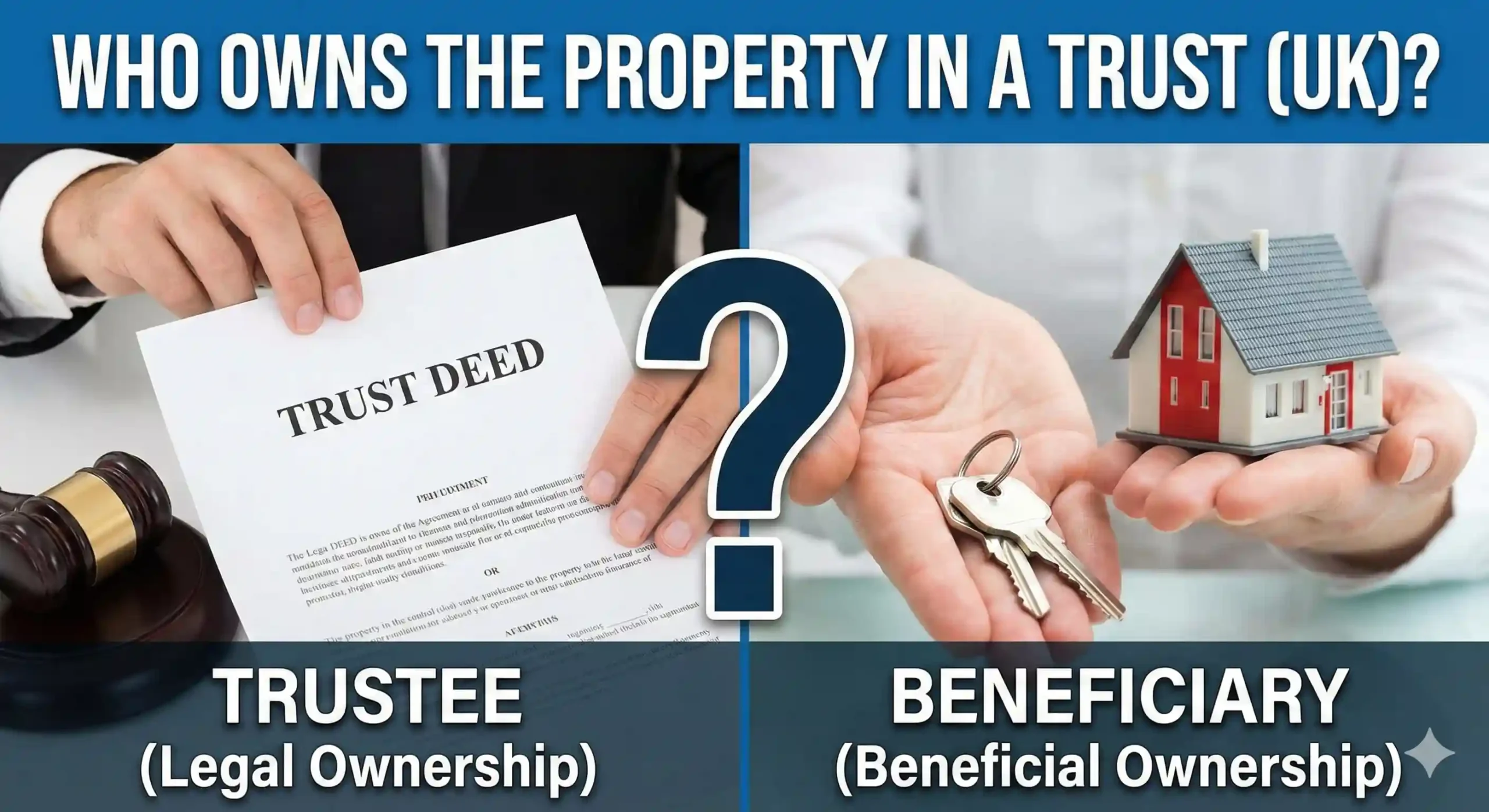


Property ownership through a trust is a long-standing and legally recognised practice in the UK. It is commonly used for inheritance planning, protecting family assets, managing wealth, and ensuring property is passed on smoothly to future generations. Despite being widely used, trusts are often misunderstood. One of the most common questions people ask is very simple: who actually owns the property when it is placed into a trust?
This confusion is understandable because trust ownership works differently from normal property ownership. In this in-depth guide, we explain everything clearly, using easy English, natural flow, and real-world explanations. By the end, you will fully understand legal ownership, beneficial ownership, and how trusts really work in the UK.
Understanding Trusts in Simple Language
A trust is a legal arrangement where a property is transferred into a structure that is controlled by rules written in a trust deed. Once the property enters the trust, it is no longer owned in the normal personal sense. Instead, it is held and managed according to the instructions set out in the trust document.
The main purpose of a trust is control. It allows property to be managed responsibly for the benefit of specific people, either now or in the future. Trusts are often used when the owner wants to make sure property is protected, used properly, or passed on at the right time.
Every trust involves three key roles working together. The settlor is the person who creates the trust and transfers the property into it. The trustees are the people who manage the property and make decisions. The beneficiaries are the people who benefit from the trust, either through income, use of the property, or eventual ownership.
Who Is the Legal Owner of Property in a Trust?
In the UK, the trustees are the legal owners of any property held in a trust. This means that the trustees’ names appear on the property title at HM Land Registry. From a legal viewpoint, trustees are treated as the owners when dealing with banks, solicitors, tenants, and government bodies.
Trustees have the authority to manage the property. This includes renting it out, arranging repairs, paying insurance, collecting rent, and selling the property if the trust deed allows it. However, this legal ownership comes with strict responsibilities.
Trustees do not own the property for themselves. They cannot use it for personal benefit unless the trust specifically allows it. Their role is to act in the best interests of the beneficiaries and follow the rules written in the trust deed. If trustees fail to do this, they can be taken to court and held personally responsible.
What Is Beneficial Ownership?
While trustees are legal owners, beneficiaries are known as the beneficial owners. This means they are entitled to enjoy the benefits of the property. These benefits can include rental income, the right to live in the property, or receiving the property outright at a later stage.
Beneficiaries are usually not listed on the Land Registry, but their rights are protected by law. The trust deed clearly defines what each beneficiary is entitled to receive and when. This separation between legal ownership and beneficial ownership is the foundation of how trusts work.
The Role of the Settlor After the Trust Is Created
Once the settlor places a property into a trust, they usually give up ownership. The property no longer belongs to them personally. This is a key legal step because the trust must be independent to work properly.
In some cases, the settlor may also act as a trustee or beneficiary, but the property still belongs to the trust structure rather than the individual. If the settlor keeps too much control, it may affect tax treatment or reduce the legal protection the trust is meant to provide.
Types of Property Trusts in the UK
There are several types of trusts used for property ownership in the UK. Each serves a different purpose and offers different levels of control and protection.
A bare trust is the simplest form. The beneficiary has an absolute right to the property and any income it generates. The trustee simply holds the property in name only. Bare trusts are often used when property is held for children until they reach adulthood.
A discretionary trust gives trustees the power to decide how income and assets are distributed among beneficiaries. Beneficiaries do not have fixed rights, which makes this trust flexible. It is commonly used in estate planning and family wealth protection.
An interest in possession trust allows one beneficiary to receive income from the property, while another beneficiary receives the capital at a later date. This structure is often used in wills, especially where a surviving spouse can live in or receive income from a property while children inherit later.
Why Property Owners Use Trusts
Property owners use trusts for many reasons. Trusts help protect property from misuse, manage inheritance, reduce family disputes, and provide long-term planning solutions. They are especially useful for blended families, vulnerable beneficiaries, or situations where the owner wants clear control over how property is used.
Trusts can also provide continuity. If trustees change or pass away, the trust continues to operate. This stability makes trusts suitable for long-term property holding.
Tax Considerations for Property in Trusts
Property held in a trust may be subject to income tax on rental earnings, capital gains tax when the property is sold, and inheritance tax depending on the trust type. Tax rules are complex and vary based on individual circumstances.
While trusts are sometimes associated with tax planning, they should not be set up purely to avoid tax. Professional legal and tax advice is essential before transferring property into a trust.
Responsibilities and Risks for Trustees
Being a trustee carries serious responsibility. Trustees must act honestly, keep accurate records, and make decisions carefully. They must treat beneficiaries fairly and avoid conflicts of interest. Failure to meet these duties can lead to personal legal liability.
Final Conclusion on Property Ownership in Trusts
In the UK, trustees legally own property held in a trust, while beneficiaries receive the benefits. The settlor creates the trust but usually gives up ownership. This structure allows property to be protected, managed responsibly, and passed on according to clear rules. Understanding trust ownership is essential for anyone involved in UK property planning.